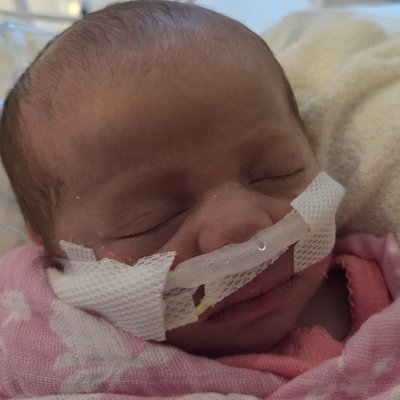
Understanding Congenital AML

A rare leukemia present at or near birth. This page exists to raise awareness, share what's known, and point families and supporters toward trusted resources.

What it is

What is congenital AML?

Acute myeloid leukemia (AML) is a cancer of the blood and bone marrow, where the body produces large numbers of abnormal blood cells. When leukemia is diagnosed in the first weeks of life, it is called congenital leukemia — a very rare condition, generally defined in medical literature as leukemia diagnosed between birth and about four weeks of age. In newborns, AML is the most common form.

Congenital AML is rare, estimated to occur in roughly 1 to 5 newborns per million births. Because it begins so early, its signs can appear at or shortly after birth — and they can look like those of other, more common newborn conditions, which is one reason awareness matters. The disease is strongly linked to specific genetic changes, which doctors use to understand its risk and guide treatment.

This page is for awareness and general information only. It is not medical advice and cannot replace a doctor. If you have any concern about a child's health, please speak with a qualified medical professional. For detailed information on diagnosis, treatment, and outlook, see the trusted organizations linked below.

What to know

Signs and symptoms

The signs of congenital AML can be easy to miss or mistaken for other, more common newborn conditions. Many of the symptoms below have causes that have nothing to do with leukemia. They are listed here for awareness, not for diagnosis.

Only a doctor can determine what is causing any of these signs. If you notice anything about a child's health that worries you, contact a qualified medical professional. Most of the time these symptoms are caused by something other than leukemia — but they should always be checked by someone qualified to assess them.

Our story

Tala's story

November 11, 2025 February 3, 2026

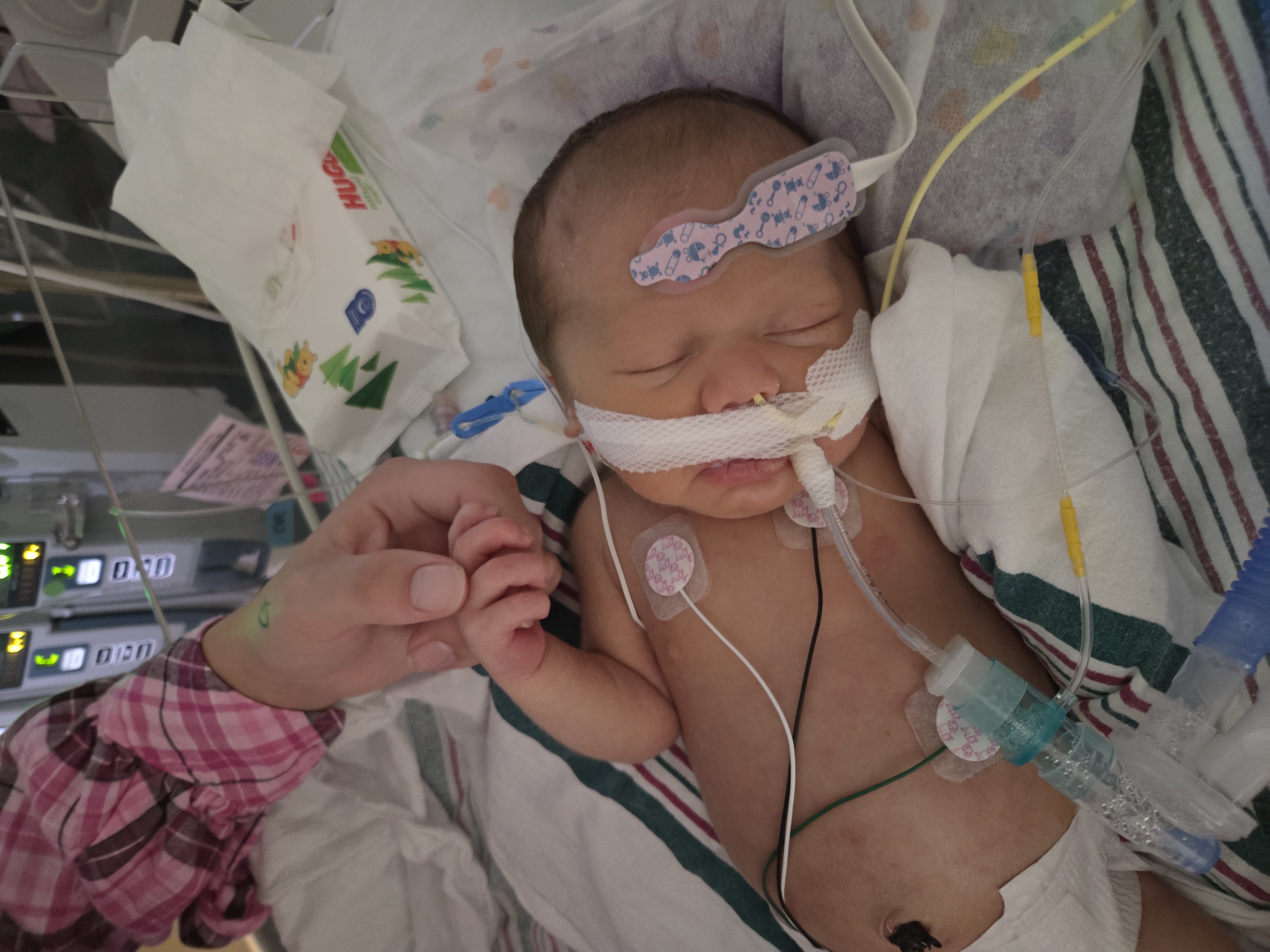
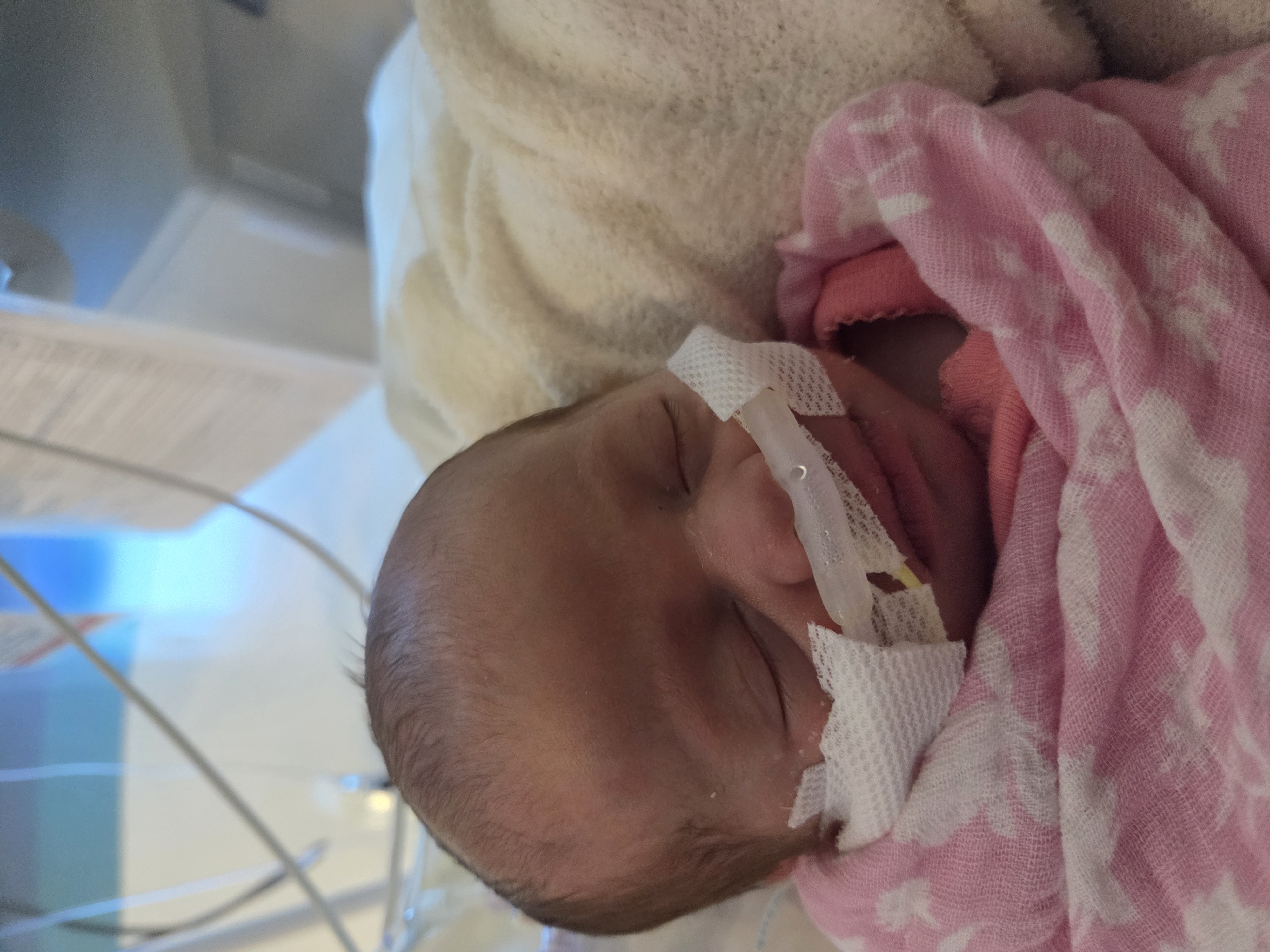
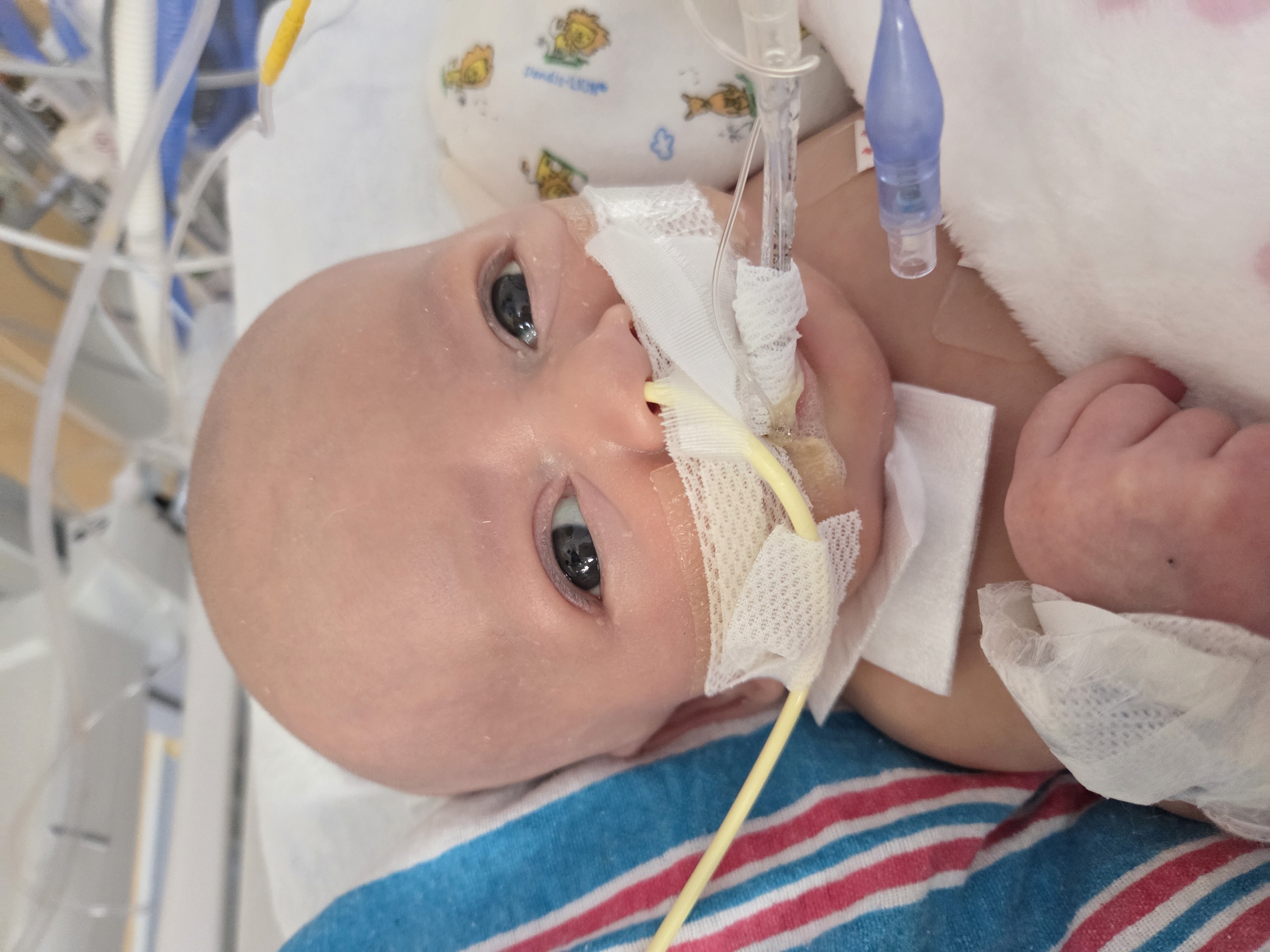
Our daughter Tala was born on November 11, 2025, by emergency C-section, after she did not want to descend. We did not find out until later that this was Tala fighting to survive — normal delivery would have been extremely high-risk for her condition.

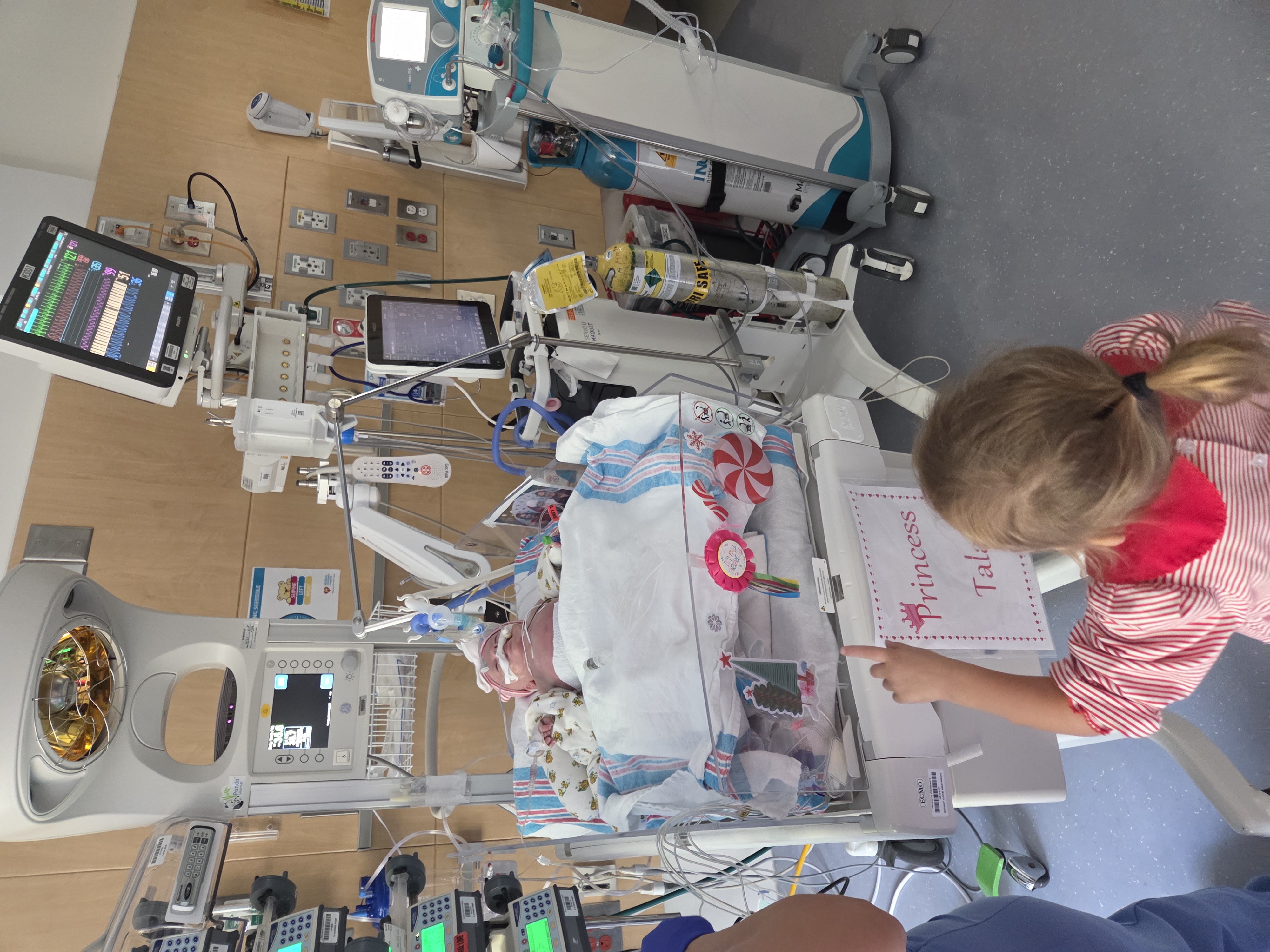
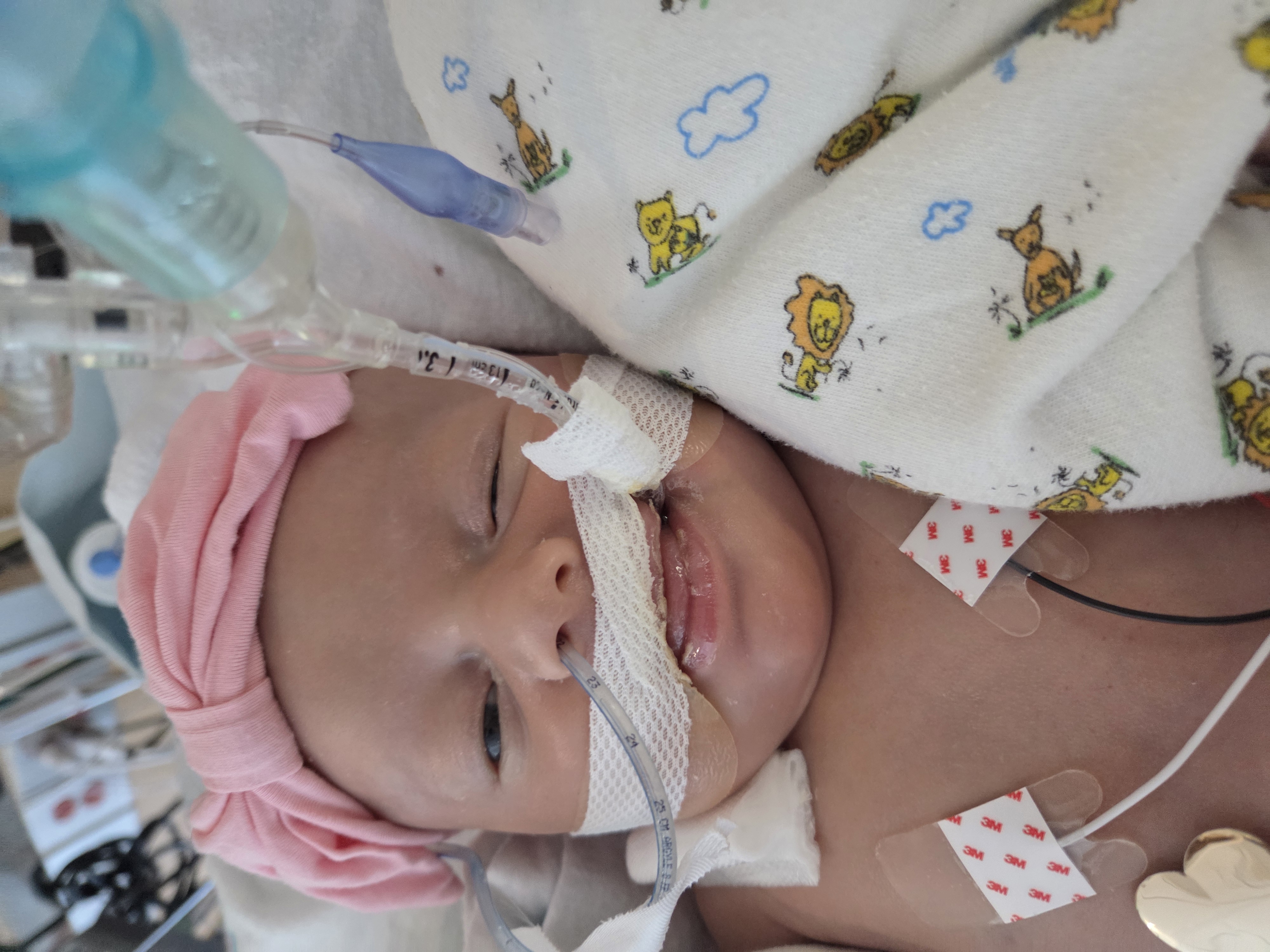
At first it was a mystery. She was covered in small blue spots and struggling to breathe. She was taken from us before we could hold her. To save her life, she was intubated and transferred immediately to a trauma-level NICU. We were terrified and confused. My wife's pregnancy had been perfect. She'd been under the care of a perinatologist. There had been no warning.

The next day, we got her diagnosis — congenital AML. Two weeks later, we got the genetics of the mutation back as high-risk.

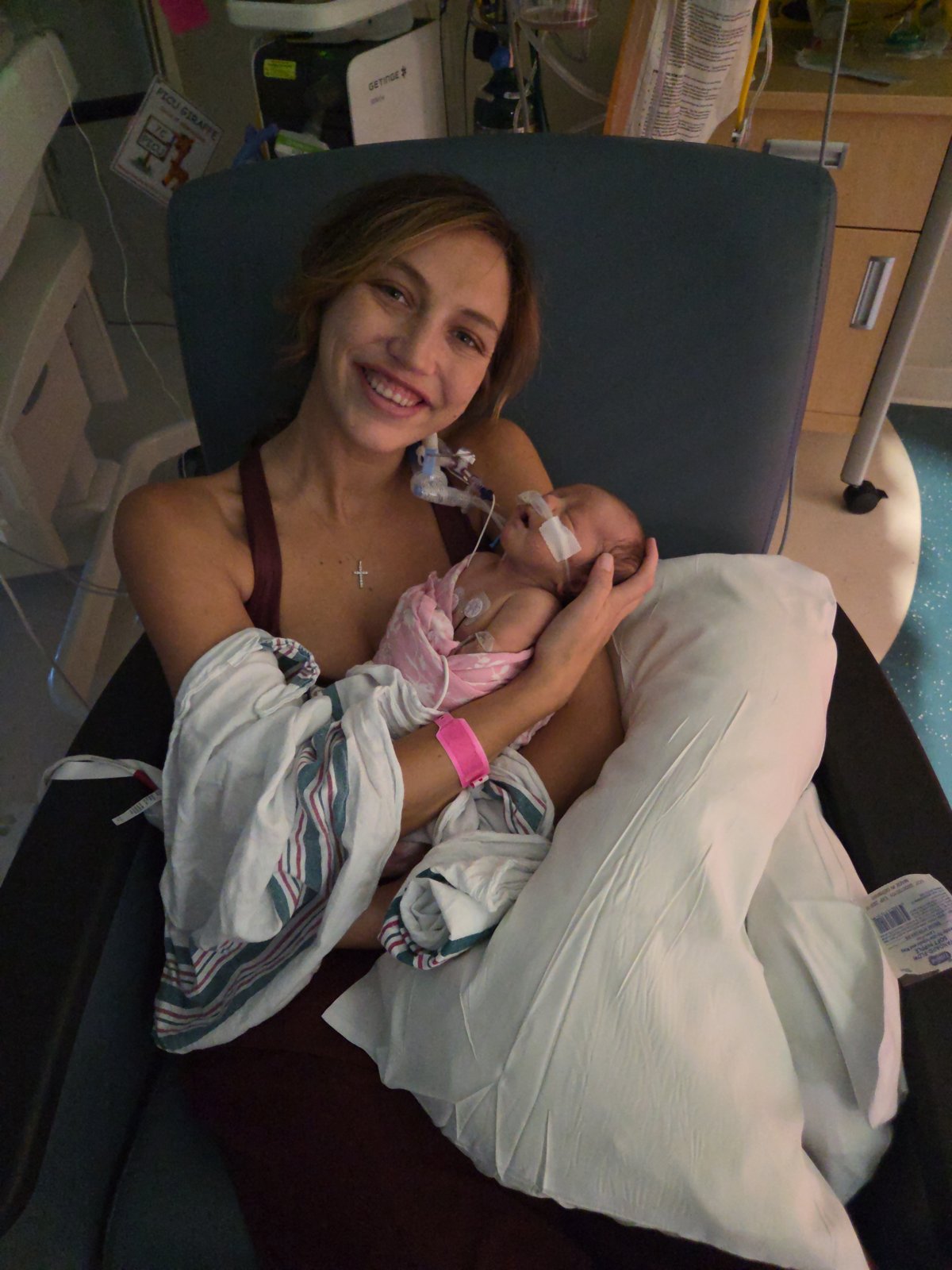
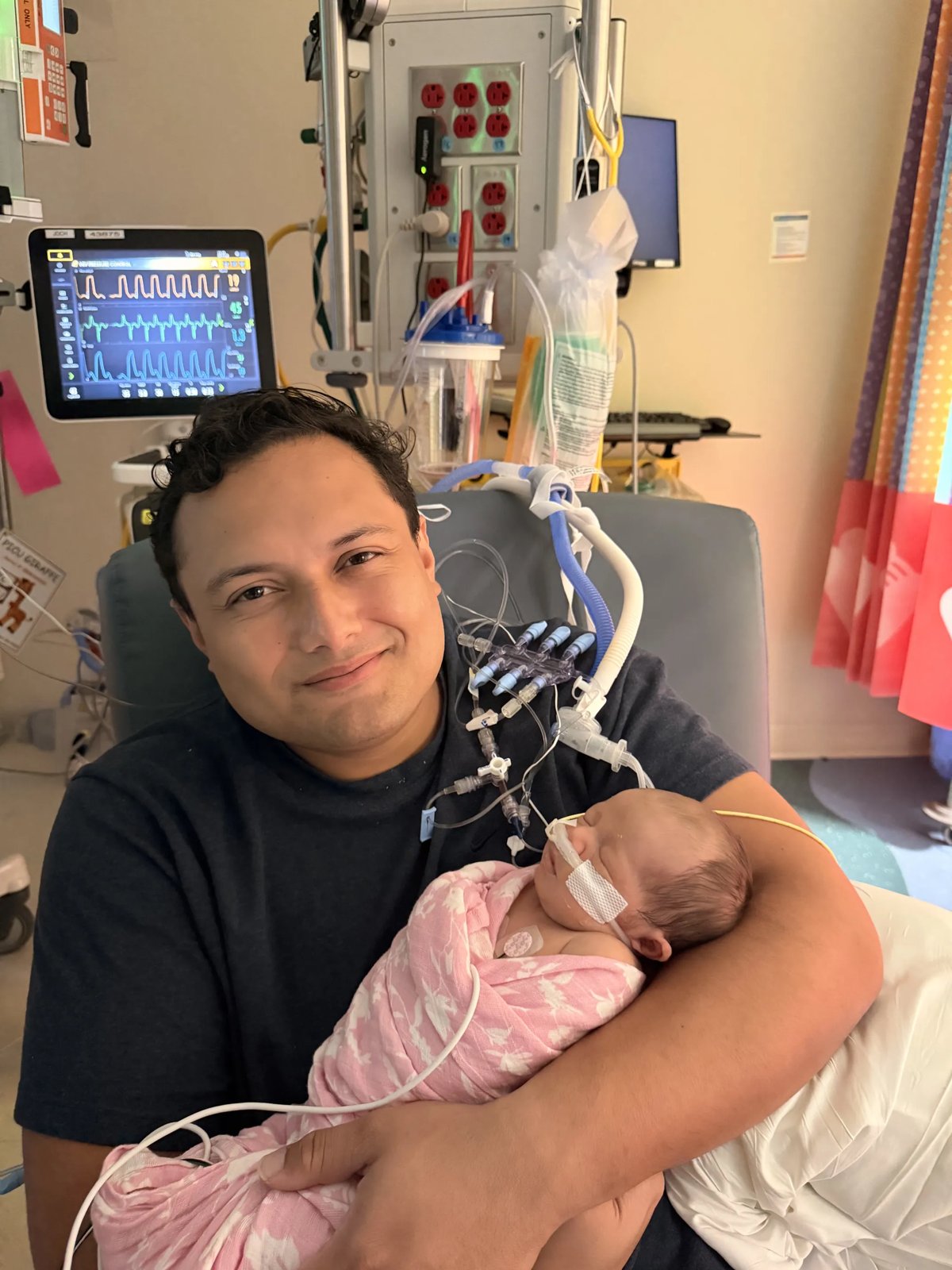
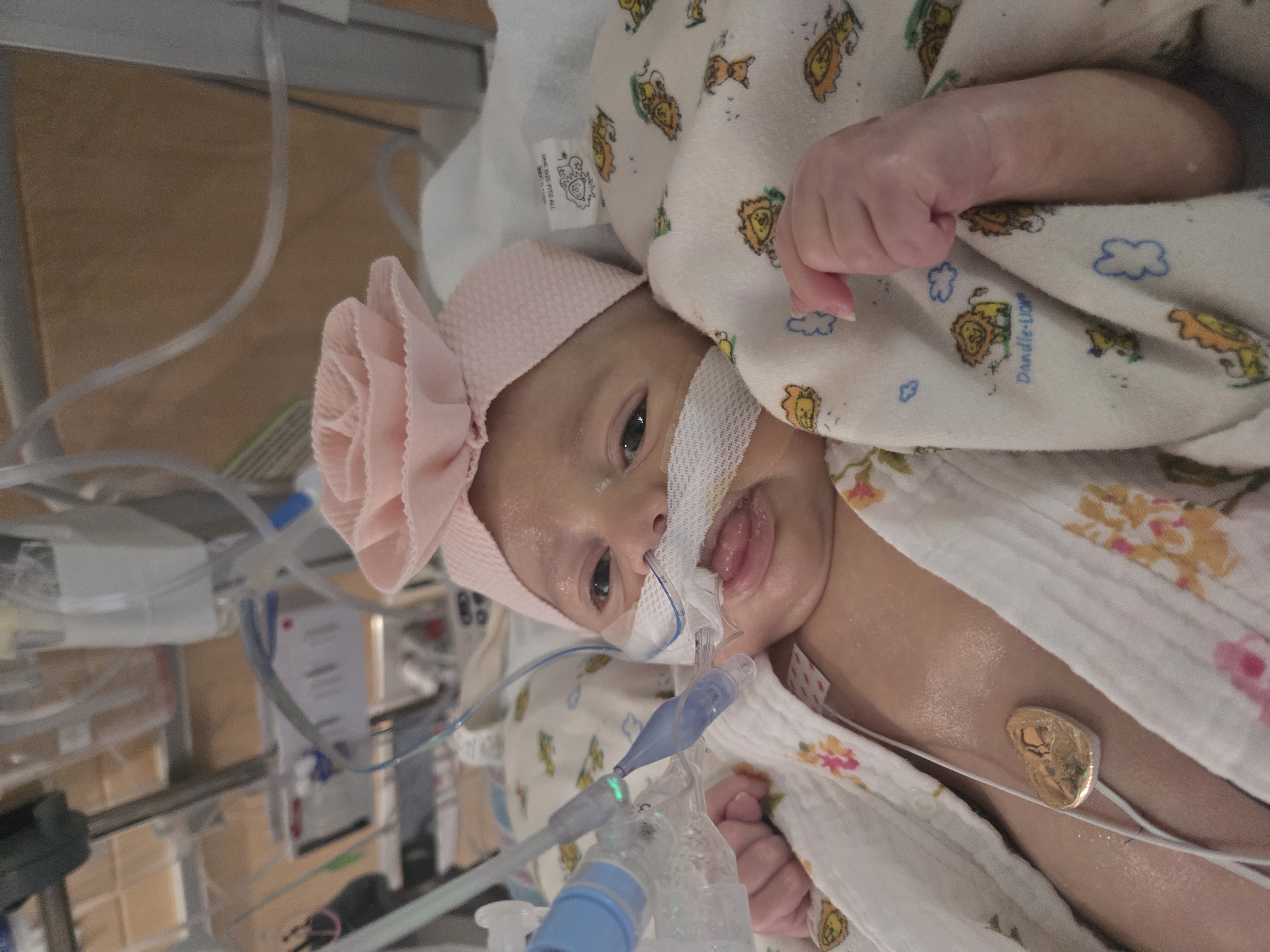
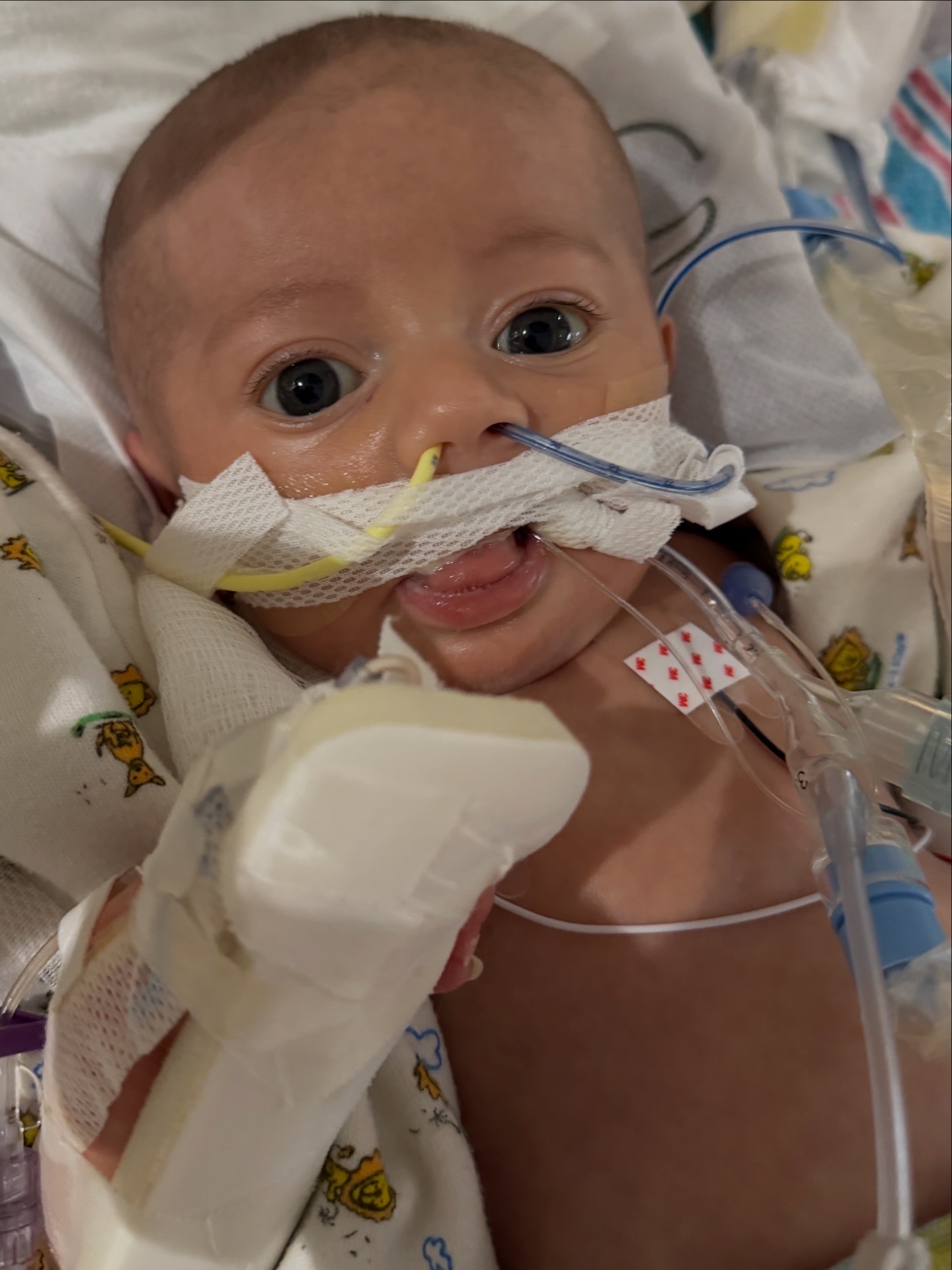
She started chemotherapy on day two of her life, for ten days. We spent the following two and a half months with her in the hospital every day as a family — helping her through chemotherapy, advocating for our daughter, staying close, doing everything we could. We never missed a round with her doctors, and learned to interpret every lab and every radiology image and report ourselves.

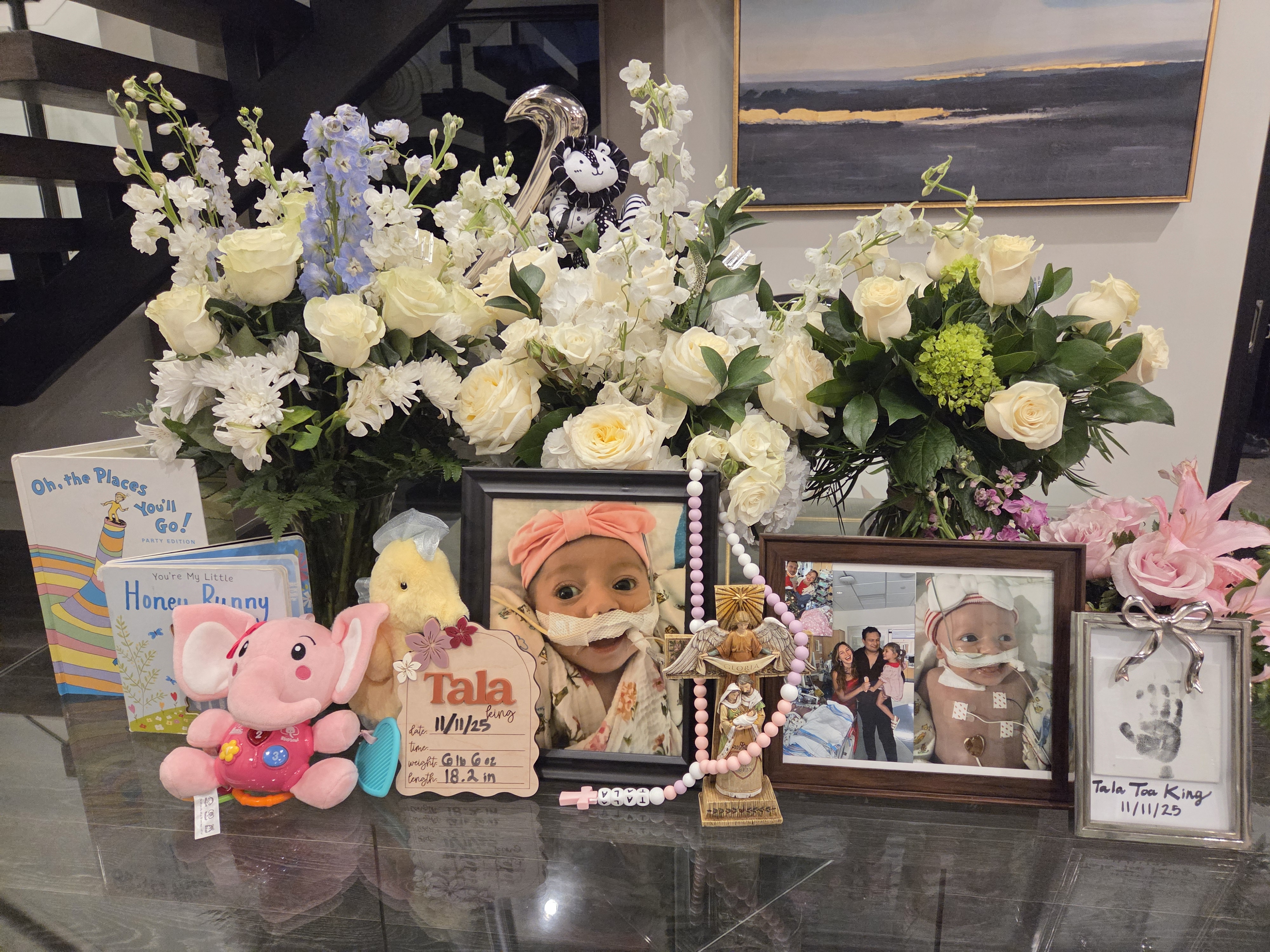
Though she overcame so much more than just her chemo, our precious Tala died on February 3, 2026, before she could begin her second round of chemotherapy.

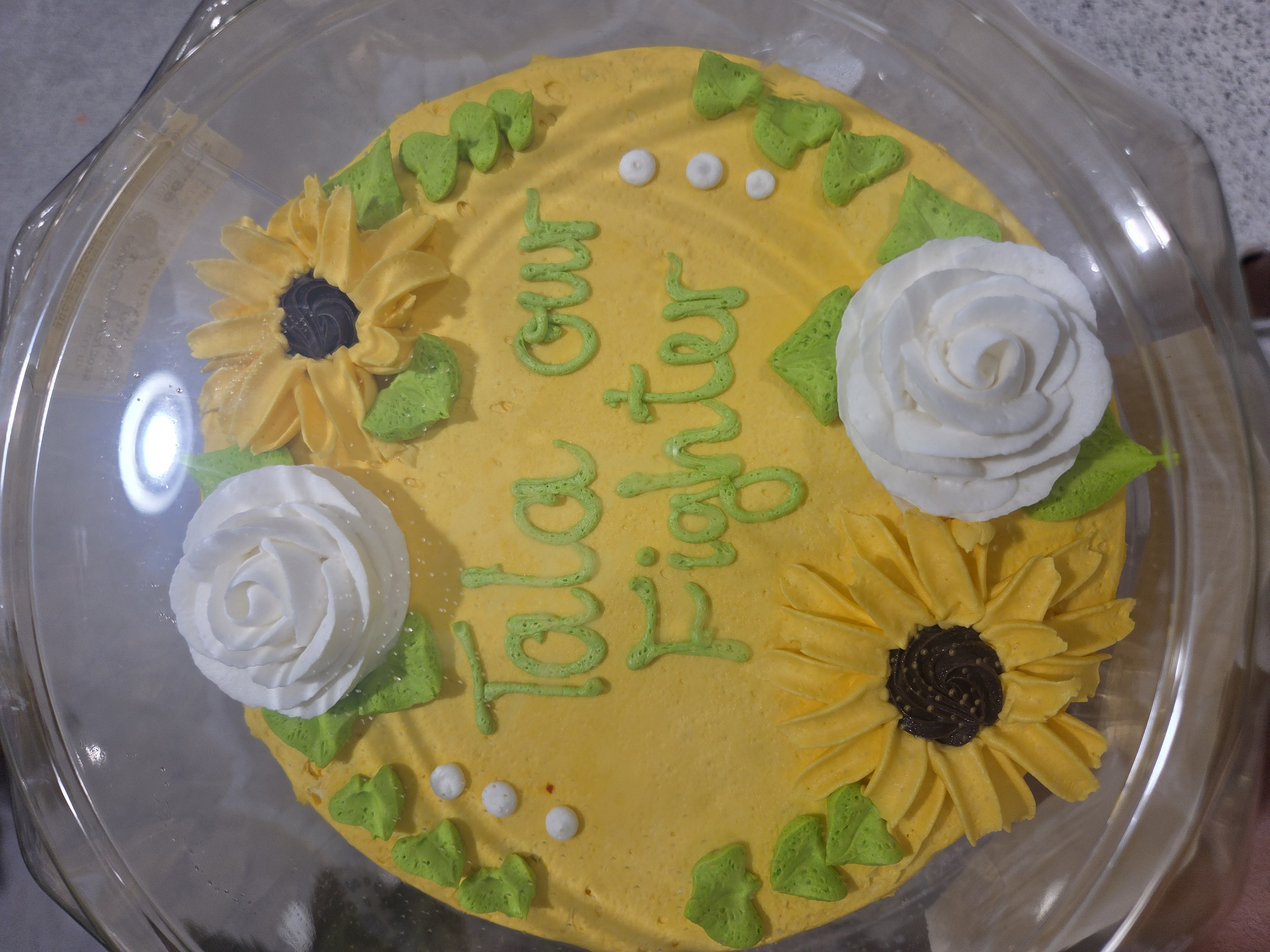
Tala, in Samoan, means "storyteller" — especially one who brings hope. And bless her, she did, and forever will be exactly that. Toa is a nickname we gave her, meaning "warrior" in Samoan, and part of her daddy's name.

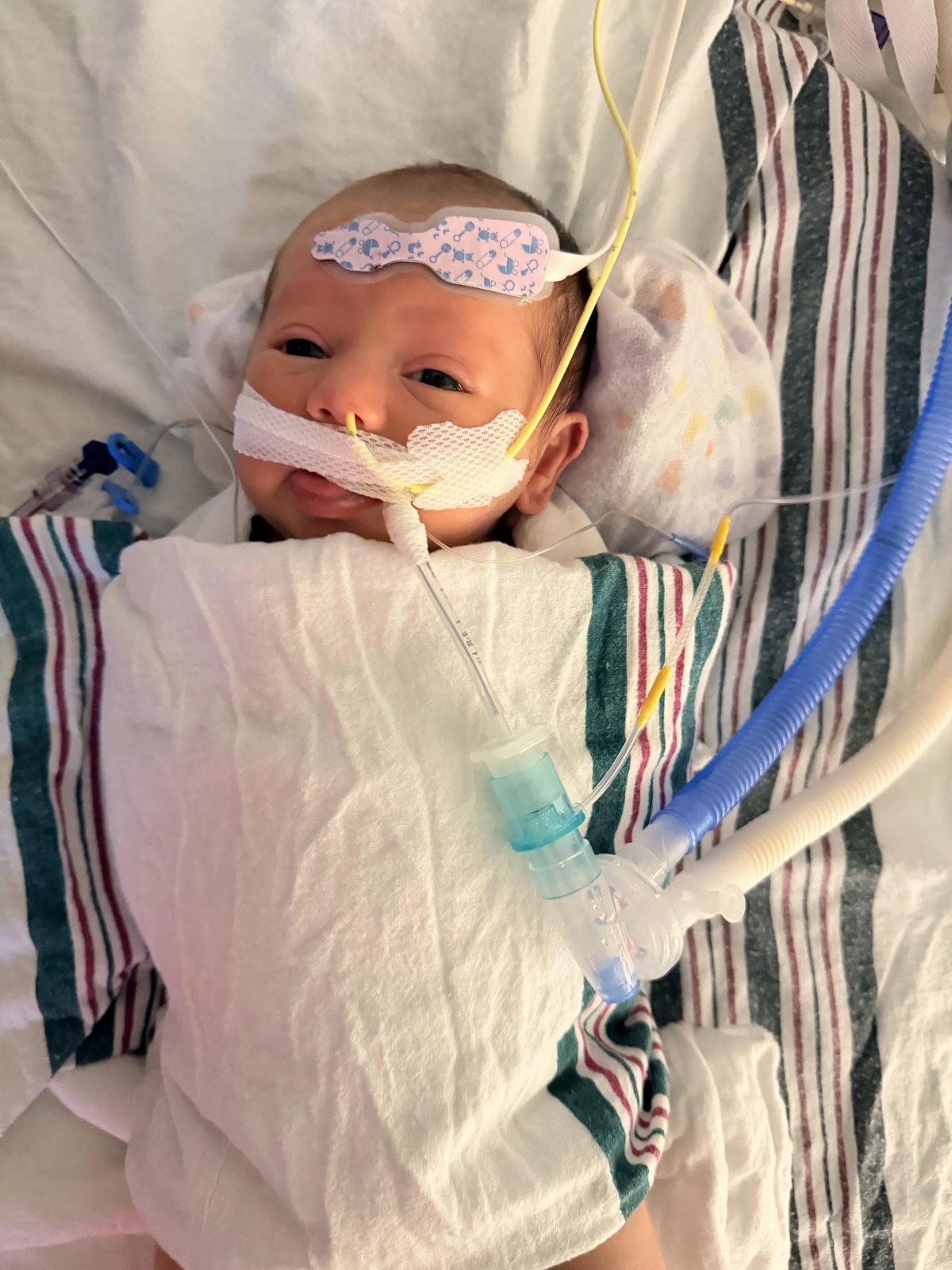
Tala never stopped smiling, sticking out her silly little tongue, or taking her eyes off her parents and big sister, who never left her side. Through pain, she was filled with joy, peace, and light. That is her legacy, and who she will always be.

This page exists because of Tala. Congenital leukemia is rare, and it can arrive without any warning — even when everything about a pregnancy seems healthy. We're sharing her story, and what we learned, in the hope that we can help any other family going through this, in any way we can. If that's you: you are not alone.

In her memory

Light a candle for Tala

A small way to hold her in your thoughts for a moment.

Tap the candle to light it for Tala

For Tala

Leave a prayer or message

If you'd like to share a prayer, a memory, or a few words for Tala and her family, we'd be grateful to read them.

Help & information

Where to find help and information

These are starting points. A family's own medical team is always the best source of guidance for their specific situation — but if you're looking for trustworthy information, support, or help, these organizations are here.